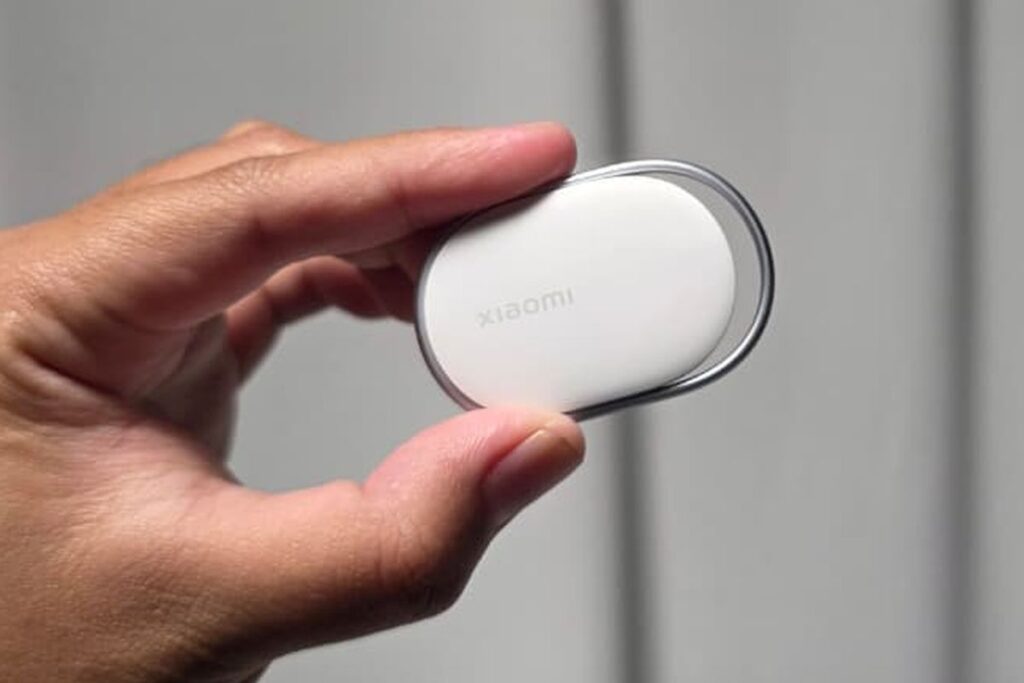

lucadelladora – Xiaomi has quietly launched its first Bluetooth tracker internationally, introducing a competitor to Apple’s AirTag. The device, called Xiaomi Tag, is already available for purchase in several Southeast Asian markets. It supports both Apple Find My and Google Find Hub tracking networks.
Read More : Sweet Potato, Feta and Butter Bean Traybake Recipe
The international listing appeared earlier this week on Xiaomi’s global website. The listing confirmed the product’s availability outside China and revealed hardware specifications previously missing from earlier teaser materials. Xiaomi had previously hinted at the product through a promotional page released by its French division.
Many observers expected Xiaomi to delay sales until its upcoming global launch event. The company is scheduled to hold that event soon, with several new products expected to appear. Some reports suggested the Xiaomi Tag would not reach the market until February 28.
However, Xiaomi has already begun selling the Bluetooth tracker in Malaysia and Thailand. The early retail availability suggests the company is rolling out the product gradually across different markets. This approach allows Xiaomi to introduce the device quietly while building awareness ahead of its broader product announcements.
The Xiaomi Tag enters a competitive segment dominated by Apple’s AirTag and other Bluetooth tracking devices. These trackers help users locate lost items such as keys, bags, or luggage. By connecting to large device networks, they can provide location updates when an item moves out of Bluetooth range.
Xiaomi’s product supports Apple Find My as well as Google’s Find Hub network. Compatibility with both ecosystems increases its usefulness for users with different smartphone platforms. This dual compatibility could become a major selling point for the device.
Battery life is another key feature highlighted by Xiaomi. The company states the Xiaomi Tag can operate for more than one year on a single battery. Long battery life is an important factor for tracking devices because they are often attached to everyday items.
The device represents Xiaomi’s first entry into the global Bluetooth tracking market. The company has previously focused on smartphones, wearables, and smart home products. Adding a tracking device expands its growing ecosystem of connected accessories.
Xiaomi Tag Prices Undercut Apple AirTag with Discounted Bundles
Xiaomi has launched the Xiaomi Tag with aggressive pricing in Southeast Asian markets. In Malaysia, a single unit normally sells for MYR 79, which equals about 20 US dollars. A promotional discount currently reduces the price to MYR 59, or roughly 15 dollars.
In Thailand, the standard retail price is THB 599, which also equals about 20 dollars. Launch discounts reduce that price to THB 429, or about 14 dollars. These early discounts appear designed to attract buyers during the product’s initial release period.
Xiaomi also offers a four-pack bundle similar to Apple’s AirTag package options. This bundle approach allows customers to track several items at once, such as bags, wallets, and keys. The strategy mirrors Apple’s own AirTag bundle offering.
The four-pack bundle normally costs MYR 299 in Malaysia and THB 1,990 in Thailand. However, launch promotions reduce those prices to MYR 199 and THB 1,490 respectively. These discounted prices equal roughly 51 dollars in Malaysia and about 48 dollars in Thailand.
Compared with Apple’s AirTag, Xiaomi’s bundle offers significant savings. Apple’s four-pack of AirTags typically sells for around 99 dollars in many markets. Xiaomi’s equivalent bundle therefore costs more than fifty percent less during the promotional period.
Lower pricing could make the Xiaomi Tag appealing to budget-conscious consumers. Bluetooth trackers are often purchased in multiples because users attach them to several personal items. Competitive bundle pricing may encourage buyers to choose Xiaomi’s alternative.
Although Xiaomi has begun selling the tracker in Malaysia and Thailand, the company has not confirmed a full global release schedule. Additional markets may receive the device later in the year. Wider availability could depend on Xiaomi’s upcoming international launch announcements.
The introduction of the Xiaomi Tag reflects growing demand for item tracking devices worldwide. As digital ecosystems expand, accessory products like Bluetooth trackers play a larger role in everyday technology use. Xiaomi’s new device positions the company to compete directly in this expanding category.