
lucadelladora – Intel is positioning its upcoming Panther Lake processors as a major shift for gaming handheld performance and efficiency. The company highlights gains in power efficiency and integrated graphics capability as key advantages. These features are especially important for portable gaming devices with strict power limits. Intel has also openly challenged AMD’s leadership in the handheld market. The statements come as new Panther Lake laptops and processors begin appearing publicly.
Intel Targets Gaming Handhelds With Panther Lake Efficiency and iGPU Gains
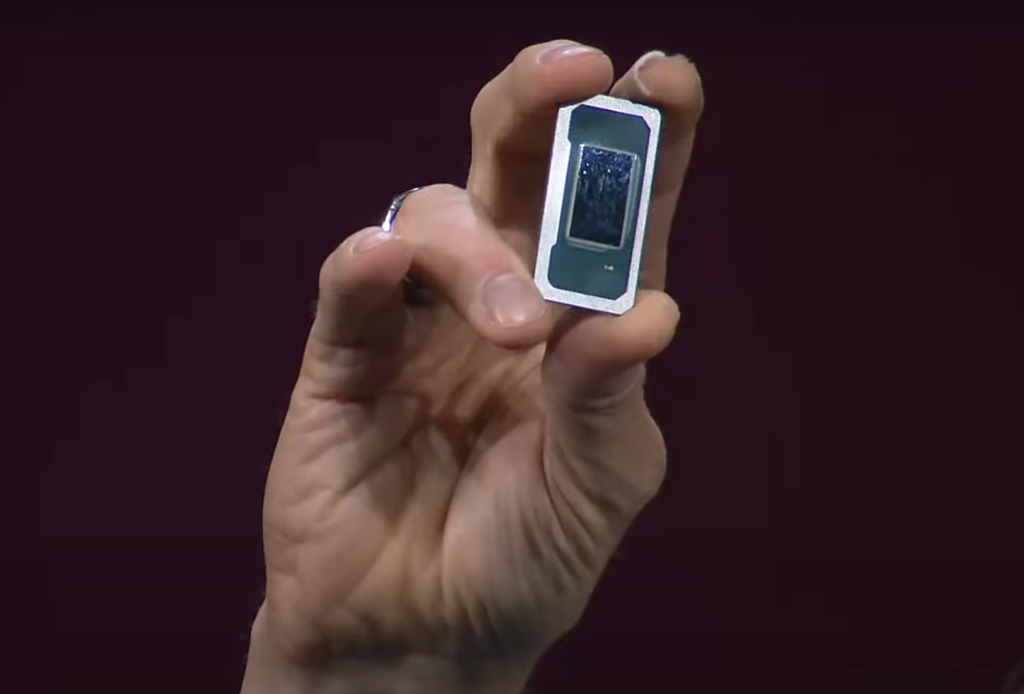
Over the past few days, manufacturers have unveiled dozens of laptops based on Intel Panther Lake chipsets. Beyond notebooks, Intel sees strong potential in gaming handhelds. Processors such as the Intel Core Ultra X7 358H are attracting attention from handheld makers. Intel combines four performance cores with twelve efficiency cores in this design. The configuration aims to deliver strong CPU performance while maintaining low power consumption.
Intel emphasizes that Panther Lake was designed with efficiency in mind. This approach is critical for handheld devices operating under tight thermal and battery constraints. Typical handheld power limits range from 10 to 25 watts. Intel says Panther Lake should perform well within that envelope. Upcoming benchmarks are expected to provide clearer insight into real world handheld performance.
The integrated graphics solution is another focal point. Early testing of the new Intel Arc B390 iGPU has shown promising results. In initial demonstrations, the iGPU reportedly ran Cyberpunk 2077 at ultra settings. The test used a 1200p resolution with XeSS set to balanced mode. Performance reached 60 frames per second at a power draw of 55 watts.
While 55 watts exceeds handheld limits, Intel views the result as encouraging. The company expects lower power configurations to remain competitive. Efficiency scaling will be critical for handheld adoption. Intel believes its architectural improvements can translate into usable performance at lower wattages. This could make Panther Lake a viable alternative for portable gaming systems.
Intel Challenges AMD’s Handheld Dominance as Market Shifts
Intel has paired its technical claims with direct criticism of its main competitor. In an interview with PCWorld, a senior Intel executive questioned AMD’s current handheld offerings. Nish Neelalojanan, Senior Director of Product Management for Client Computing, described AMD’s chips as outdated. He said Intel is delivering processors designed specifically for the handheld market.
Neelalojanan’s comments appear aimed at AMD’s recent product strategy. The AMD Ryzen AI 9 HX 475 is widely viewed as an incremental update. It closely resembles the Ryzen AI 9 HX 375 with slightly higher clock speeds. The integrated Radeon 890M graphics remain based on the RDNA 3+ architecture. This comes despite AMD already introducing RDNA 4 elsewhere.
AMD has dominated the gaming handheld market for several years. Popular devices such as the Steam Deck and Asus ROG Xbox Ally X rely on AMD Ryzen processors. These chips have delivered strong performance and efficiency for portable gaming. As a result, AMD has built a strong ecosystem and developer familiarity.
Read More : Samsung Launches 130-Inch Micro RGB TV With Rich Colors
Intel’s presence in handhelds has been limited so far. Only a small number of devices, such as the MSI Claw 8 AI+, use Intel processors. That situation could change with the introduction of Panther Lake. Intel appears determined to regain relevance in this segment. The company is framing Panther Lake as a modern alternative to established solutions.
The broader market remains competitive and diverse. The Nintendo Switch 2, for example, uses an Nvidia chipset rather than AMD or Intel. This highlights the range of approaches available to handheld manufacturers. Intel’s challenge will be converting technical promise into commercial adoption. If Panther Lake delivers at low power levels, the balance of the handheld market could begin to shift.