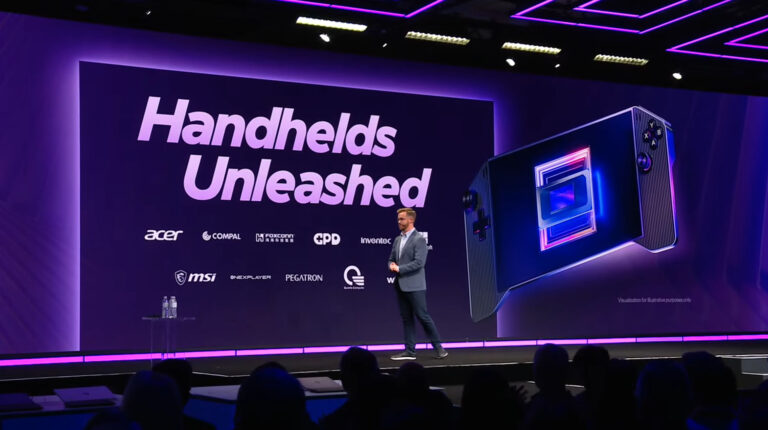

lucadelladora – Intel is preparing a new push into the gaming handheld market with a processor designed specifically for portable consoles. A recent leak has revealed early details about the upcoming Intel Core G3 series. The move signals a strategic shift as Intel responds to growing competition. Gaming handhelds have become an increasingly important segment within the PC industry. Performance, efficiency, and battery life are now central priorities for chipmakers.
Read More : Johnson completes £35m move and joins Palace project
Intel Core G3 Leak Reveals Handheld-Focused CPU and Arc iGPU Design
Intel is expected to introduce the Core G3 processor family for gaming handhelds. The company reportedly optimizes these chips for devices similar to the Steam Deck. VideoCardz first reported the information, revealing details about core configurations and integrated graphics.
Intel is said to base the Core G3 series on the Panther Lake architecture, which underpins the company’s next-generation mobile processors. However, Intel does not simply rebrand existing desktop or laptop chips for the Core G3 lineup. Instead, the company appears to customize the design specifically to meet the power limits of handheld devices, mirroring recent trends in the gaming handheld market.
According to the leak, the fastest Core G3 model features a 14 core configuration. It reportedly includes two performance cores. The processor also integrates eight efficiency cores. Additionally, four low power cores are included for background tasks. No existing Panther Lake processor reportedly offers this exact core layout.
The design prioritizes efficiency over raw multi core performance. Gaming handhelds operate under strict thermal constraints. Reducing performance cores can improve sustained performance. Lower power consumption also extends battery life. Intel appears to be targeting these trade offs deliberately.
Graphics performance also stands as a major focus for Intel. According to the leak, the processor integrates an Intel Arc B380 GPU, which Intel positions as a lower-clocked variant of the Arc B390. Despite the reduced clock speeds, the iGPU still carries 12 Xe2 cores, indicating strong graphics capabilities for a handheld device.
Intel has significantly improved its Arc graphics in recent generations and designed the Xe2 architecture to deliver better power efficiency. Because gaming handhelds rely heavily on integrated graphics, Intel aims to achieve smooth frame rates while keeping power draw low. With this positioning, the Arc B380 targets the performance and efficiency balance required by handheld gaming systems.
Intel Challenges AMD Handheld Dominance After Ryzen Z2 Launches
Intel’s move follows recent announcements from AMD. AMD has launched multiple Ryzen Z2 series processors. Those chips are marketed specifically for gaming handhelds. AMD currently dominates the handheld PC market. Many popular devices rely on Ryzen based solutions.
AMD’s processors power most mainstream handhelds today. These include devices from Valve and other manufacturers. Performance efficiency has been a major strength for AMD. Battery life has also been competitive. Intel now appears determined to challenge that position.
Leaks suggest that Intel will introduce a second processor equipped with an Intel Arc B360 GPU. While Intel has not confirmed detailed specifications for this iGPU, reports indicate that a design based on the Arc B370 could feature 10 Xe2 cores, placing it below the Arc B380 variant in the lineup.
Intel may also extend its handheld strategy beyond a single device. Products such as the MSI Claw 8 AI+ could benefit from processors optimized specifically for handheld use. Previous Intel-powered handhelds struggled to balance performance and efficiency, but purpose-built silicon could help shift that perception. As a result, OEMs continue to monitor Intel’s progress closely.
So far, Intel has not made any official announcements regarding the Core G3 series. The company did not reveal new handheld processors at CES, nor did it announce any new Intel-based handheld devices. These absences suggest that development remains ongoing, with launch timing still uncertain.
Read More : Batman Arkham Asylum hits 60fps on Retroid Pocket 6
Industry analysts believe timing will be critical. AMD already has products shipping. Software optimization also favors existing platforms. Intel must deliver competitive performance quickly. Battery life improvements will be especially important.
The Core G3 processors are expected to complement Panther Lake. Together, they represent Intel’s broader mobile strategy. Gaming handhelds are becoming a distinct category. Dedicated silicon is now necessary to compete. General purpose mobile chips may no longer be sufficient.